The Human Layer · Edition 01
How Can Meta’s Own AI Impact Your Customers Using Meta Daily
The Human Layer — For the founders who feel responsible.
Hello, wonderful people.
Welcome to the first edition of The Human Layer — a weekly newsletter for founders who feel responsible for what they are building, what they are automating, and what they are leaving behind for the generations to come.
In a world that is moving fast with AI, the real question is simple:
Are you using tools to build a sharper version of your thinking, or are you slowly handing your thinking over to the tool?
Every week, we will bring you:
- 2 recent AI updates — what’s shifting in AI that you need to know about.
- Tools to try — industry specific tools for you to stay ahead.
- Human touch — a human element to carry forward.
Two signals this week
1) The Claude Mythos moment
Claude has been launching some of the most interesting models in 2026, especially around agentic AI. Tools like Claude CoWork and Claude Console have already started changing how founders approach execution, making it easier to move faster with structured thinking and real workflows.
But recently, something unexpected showed up.
There were hushed references to something called Claude Mythos. It wasn’t officially announced — it was declared as an accidental release, and there are debates around its power. Claude Mythos works much faster than humans at finding vulnerabilities in software, raising fears of major cyberattacks.
Mythos has built up its hype even before its official announcement.
2) Meta launching Muse Spark
Muse Spark was officially introduced by Meta on 8 April 2026. It is a natively multimodal model with support for text, image, and voice input — built for deeper reasoning, multimodal perception, and visual coding.
If you run Meta ads, build creative-heavy campaigns, or work in a business where visual output matters, this kind of tool changes your speed. Most importantly, Muse Spark can potentially determine shopping patterns for your customers using Meta. It gives you feedback directly from the apps your target audience uses on a daily basis.
You can move faster from idea to asset. You can test creative concepts faster. You can generate structured outputs without starting from zero every time.
Two tools this week
1) Claude (CoWork, workflows)
For a lot of us, Claude isn’t a new tool. And yet, many founders and professionals are still using AI at a very surface level — simple prompts, quick outputs, and moving on.
Until the first week of March, I was trying out generic tools, industry specific ones sometimes, and keeping it aside. That is how I began with Claude CoWork as well. And I spent an entire weekend revamping my entire business approach.
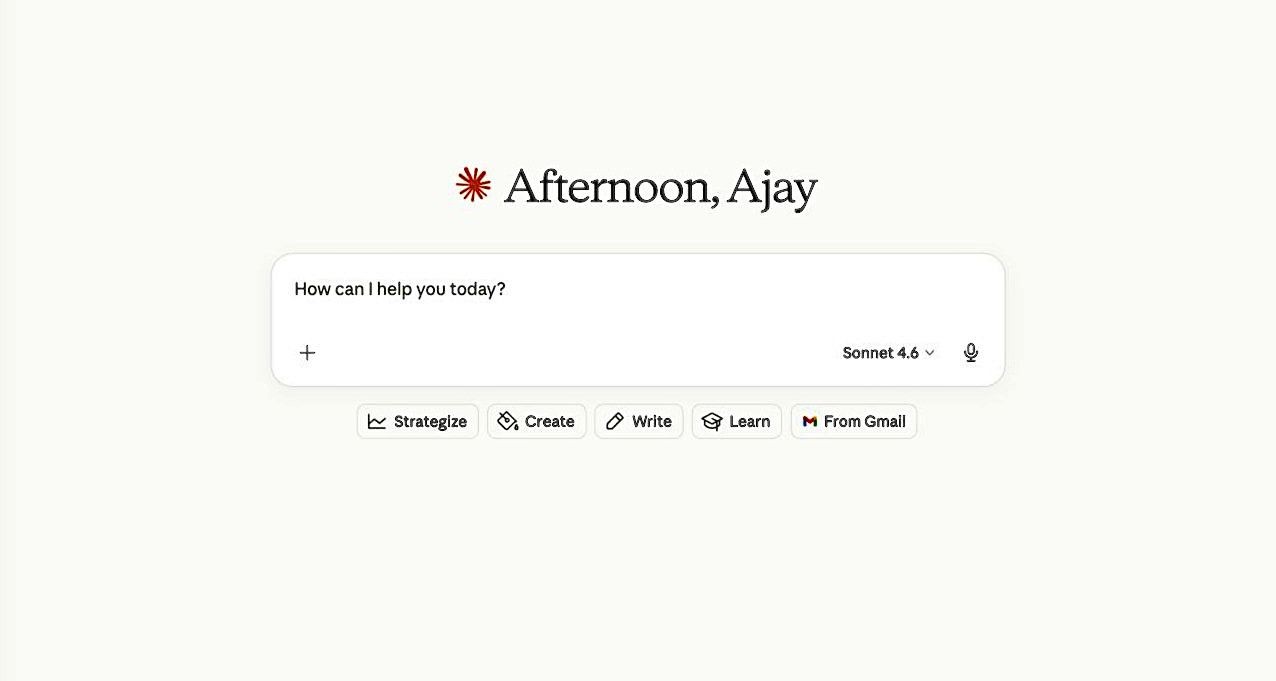
For almost 10–12 hours a day that weekend, I was on the system — understanding how workflows are structured, how context flows, and how tasks can actually be automated instead of manually pushed every time. That shift changed how I look at my business altogether. If you haven’t already, I highly encourage you to try it out.
2) Emergent
Emergent is an AI app builder that turns plain-language ideas into production-ready web and mobile apps. Its launch was in 2025, and yet many of us are unaware of what all can be done inside this tool.
A lot of founders do not need another idea. You need a working version that gets your existing ideas to reality before you spend your resources and time building it.
Emergent is relevant when you want to test an internal tool, a landing page, a client portal, a workflow dashboard, or a lightweight product without wasting weeks in dev back-and-forth. Less waiting, more building.
One human touch
Humanity has always had a strange habit. We love progress. We also silently punish people who step outside the average.
Tribes tend to reward sameness because sameness feels safe. The person who moves differently, speaks differently, thinks differently, or builds differently often gets treated like a threat before they are treated like a person. When you pursue something most people aren’t pursuing, you become a psychological threat to everyone around you who chose not to try.
Your ambition is evidence that trying was possible. And that evidence is uncomfortable to sit with.
Now AI is bringing that pressure into a new form. You can see it already: AI drafts the email. AI reads the email. AI replies to the email. Somewhere in that loop, nobody is really communicating anymore.
Communicate.
A lot of things can now be automated — tasks, follow-ups, even conversations. But if everything starts running on automation, something very basic begins to fade: the feeling of being seen.
Take a few minutes out to actually talk to your team. Ask them how they’re doing, not as a formality. A simple call, a quick check-in, a small moment of attention — it goes a long way. In systems that are becoming more efficient by the day, this is what still makes people stay.
That is all we had to share for the first edition.
Build systems that remember. Use tools that move. Keep a voice that still feels alive.
We will be back soon with simple signals & thoughts to build The Human Layer.
#humanthinkingaigrowth
Thoughts by Ajay Binani